CREDEBL is now a part of LF Decentralized Trust ecosystem! Click here to learn more.

CREDEBL is now a part of LF Decentralized Trust ecosystem! Click here to learn more.
Every year, millions of people unknowingly consume counterfeit medicines, putting their health and lives at risk. Fake pharmaceuticals not only fail to treat illnesses but often contain harmful substances. The lack of a pharmaceutical supply chain tracking system has allowed counterfeiters to infiltrate the supply chain, making it difficult for consumers and healthcare providers to differentiate between genuine and fake drugs.
According to the World Health Organization (WHO), up to 10% of medicines sold in developing countries are counterfeit medicines, leading to deadly consequences. In Africa alone, an estimated 116,000 people die annually due to substandard malaria drugs. Antibiotics, in particular, account for 36% of all counterfeit medicines seized globally between 2014 and 2016, with drugs like amoxicillin and ampicillin being among the most widely counterfeited (ScienceDirect). This growing trend highlights the urgent need for robust systems to combat this expanding threat.
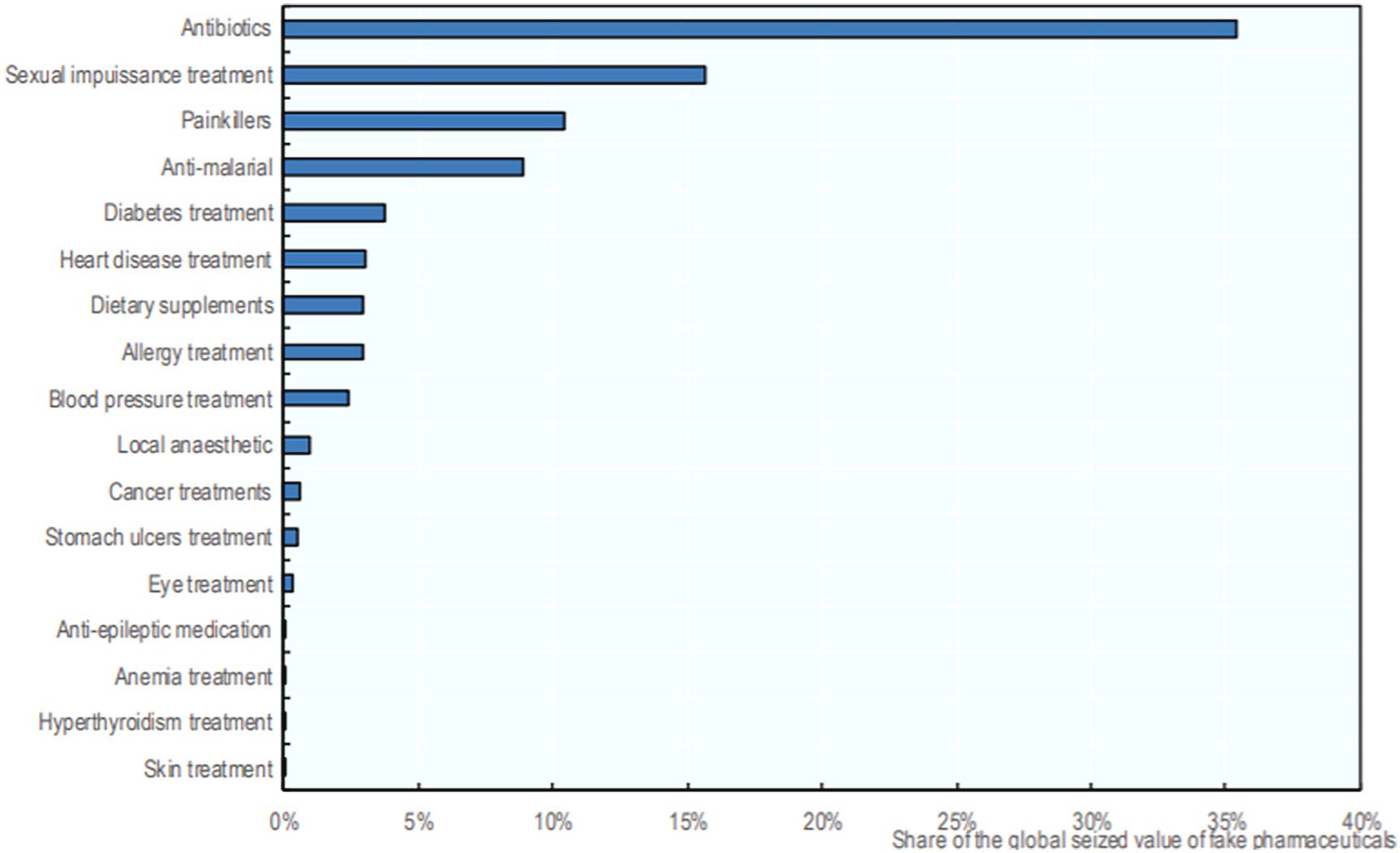 |
Most counterfeit types of pharmaceuticals seized by customs, 2014-2016 (Source: OECD)
According to the OECD, India and China are major producers of counterfeit medicines, while transit hubs like Hong Kong, Singapore, and the UAE play a key role in distribution. India alone accounted for 53% of the global counterfeit drug seizures in 2016, with China following at 30%. Other countries like Egypt and Pakistan, as well as countries in Southeast Asia, such as Vietnam, Indonesia, and the Philippines, also contribute to the global counterfeit drug supply chain. Between 2014 and 2016, customs seizures of counterfeit drugs from Singapore, Germany, Switzerland, Australia, and Egypt highlighted the global reach of the problem. In Bangladesh, which supplies 70.9% of generic medications to 48 developing countries, counterfeit drugs are a significant crisis. Despite its vital role in global generic drug supply, Bangladesh faces a severe counterfeit issue, with over 70,000 illegal drugstores facilitating the trade of counterfeit medicines worth 600 crores of Bangladeshi Taka annually (ResearchGate).
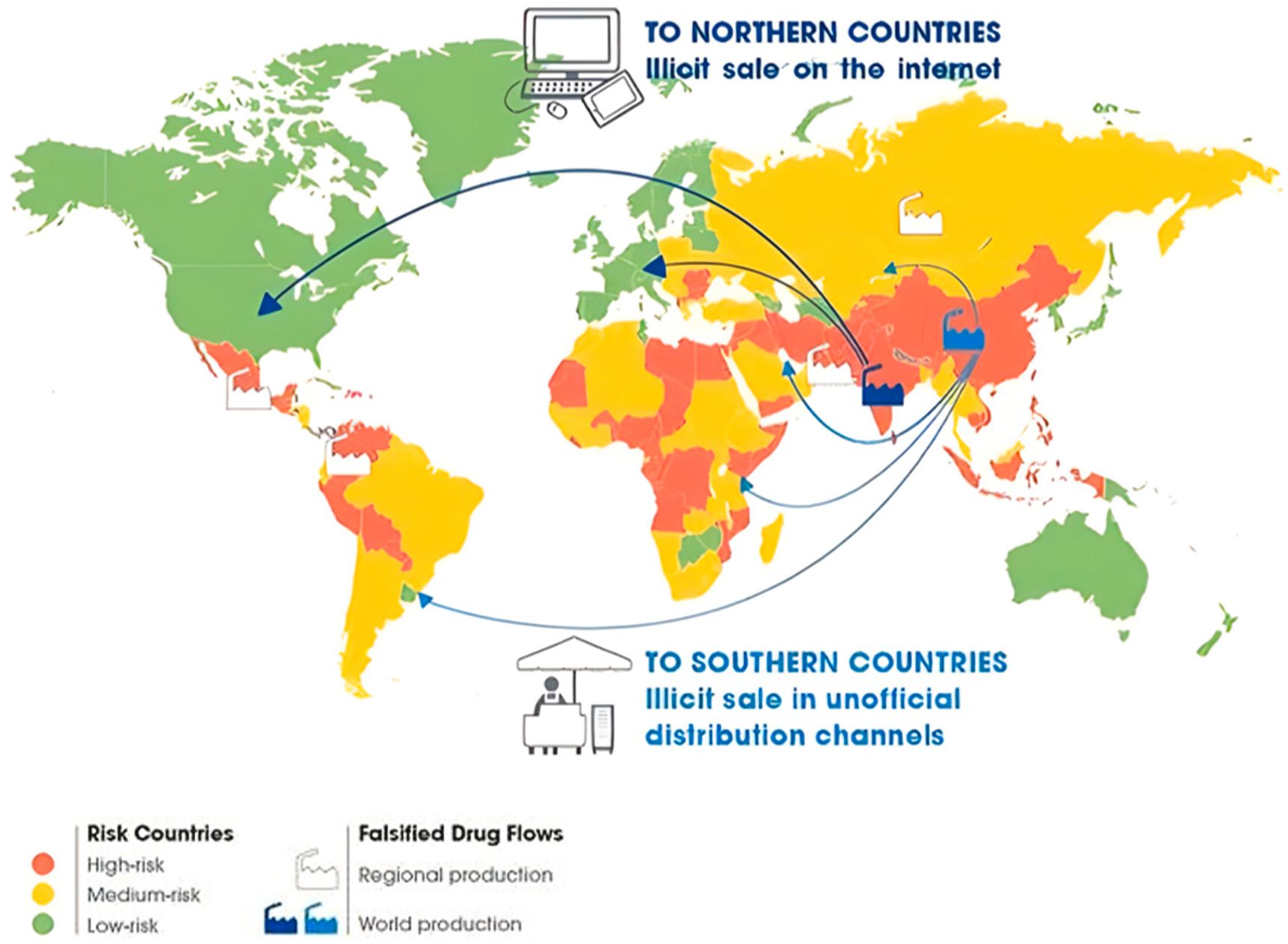 |
Global distribution of falsified medicines (Source: Health Policy Watch)
The global pharmaceutical industry also faces significant financial losses. In the European Union alone, counterfeits were estimated to have caused EUR 9.6 billion in losses for the pharmaceutical industry between 2012 and 2016. In China, the unauthorized production of a drug by counterfeiters led to a drop in sales for an international pharmaceutical company, demonstrating the broader economic impact resulted in a drop in sales to about USD 242000. Similarly, in India, it is estimated that counterfeit drugs accounted for around USD 1 billion in lost sales in 2003 (OECD). This further underscores the massive financial burden imposed by counterfeit pharmaceuticals. As per the ScienceDirect report In the United States, it is estimated that medicine counterfeiting results in annual losses ranging from $82.0 billion to $353.3 billion, leading to approximately three million job vacancies.
Novo Nordisk recently revealed that several hundred counterfeit units of its diabetes drug Ozempic were being distributed outside its authorized supply chain in the United States (Reuters). In India, authorities have busted a major counterfeit drug operation in Delhi/NCR. According to the police, information developed by Cyber Cell, Crime Branch revealed that some medicine vendors and wholesalers in the region were illegally selling spurious and unregistered lifesaving drugs, including cancer medications like Opdivo/Opdyta (BMS Company), Revolade (Novartis company), Keytruda (MSD Merck), Erbitux (Merck KGaA), Ozempic (Novo Nordisk), and Lenvima (Eisai). This operation underscores the widespread nature of the counterfeit drug problem and the serious consequences for patients who unknowingly consume such drugs (The News Minute). This incident serves as a stark reminder of the risks posed by counterfeit drugs, even for globally recognized brands.
These examples emphasize the widespread and dangerous nature of counterfeit pharmaceuticals—and the need for immediate, tech-enabled intervention.
Blockchain technology provides an innovative solution to combat counterfeit medicines by creating a decentralized, transparent, and tamper-proof system. Unlike traditional centralized databases, blockchain ensures that each transaction and movement of pharmaceutical products is permanently recorded and verifiable.
Key Benefits of Blockchain in the Pharmaceutical Supply Chain:
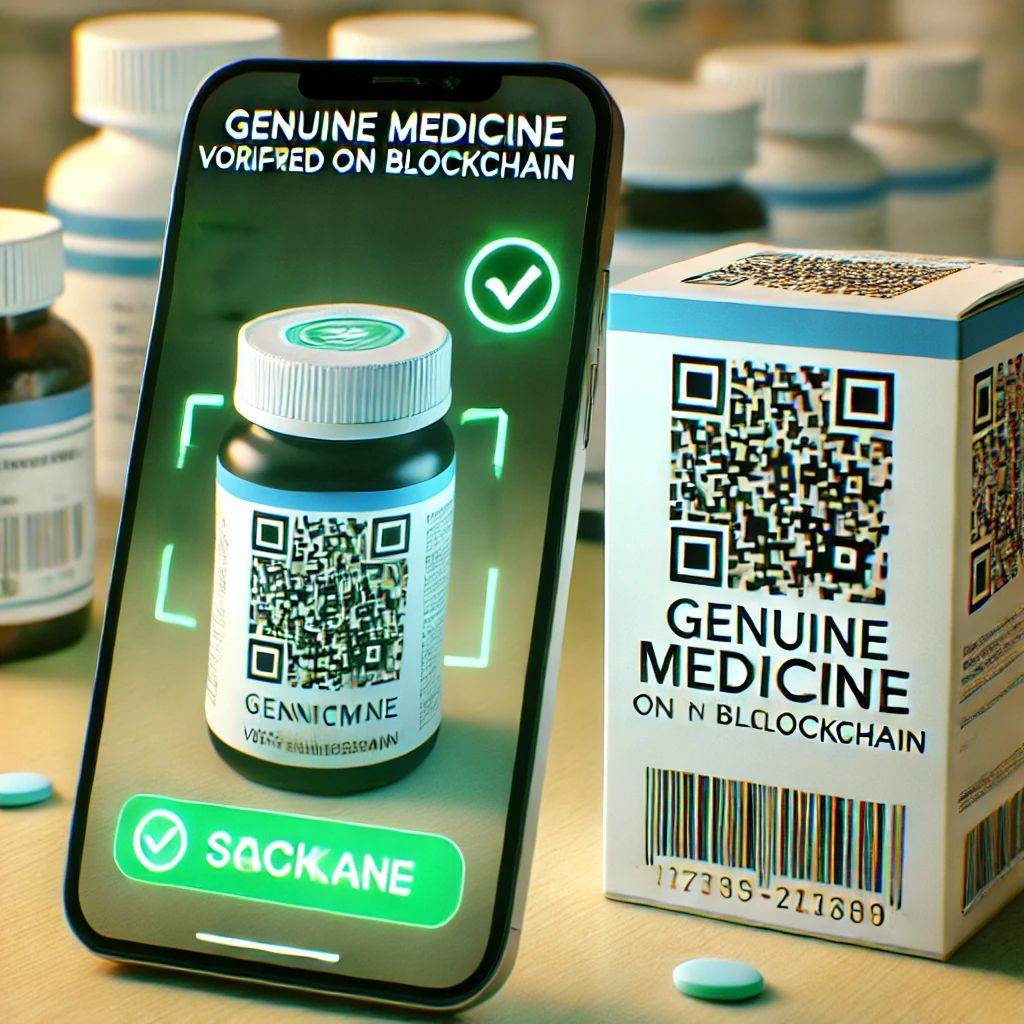 |
Combining blockchain technology with QR code verfication gives consumers and medical professionals a simple yet powerful way to verify a medicine’s authenticity instantly.
How it Works:
1. Unique QR Code Assignment: Each medicine package is assigned a unique QR code linked to a blockchain record containing product details.
2. Instant Scanning: A smartphone or scanner reads the QR code, retrieving real-time verification details from the blockchain.
3. Immediate Feedback: If the scanned code matches the blockchain record, the medicine is verified as genuine. Any discrepancies indicate possible counterfeiting.
Advantages of Blockchain-Enabled QR Code Verification:
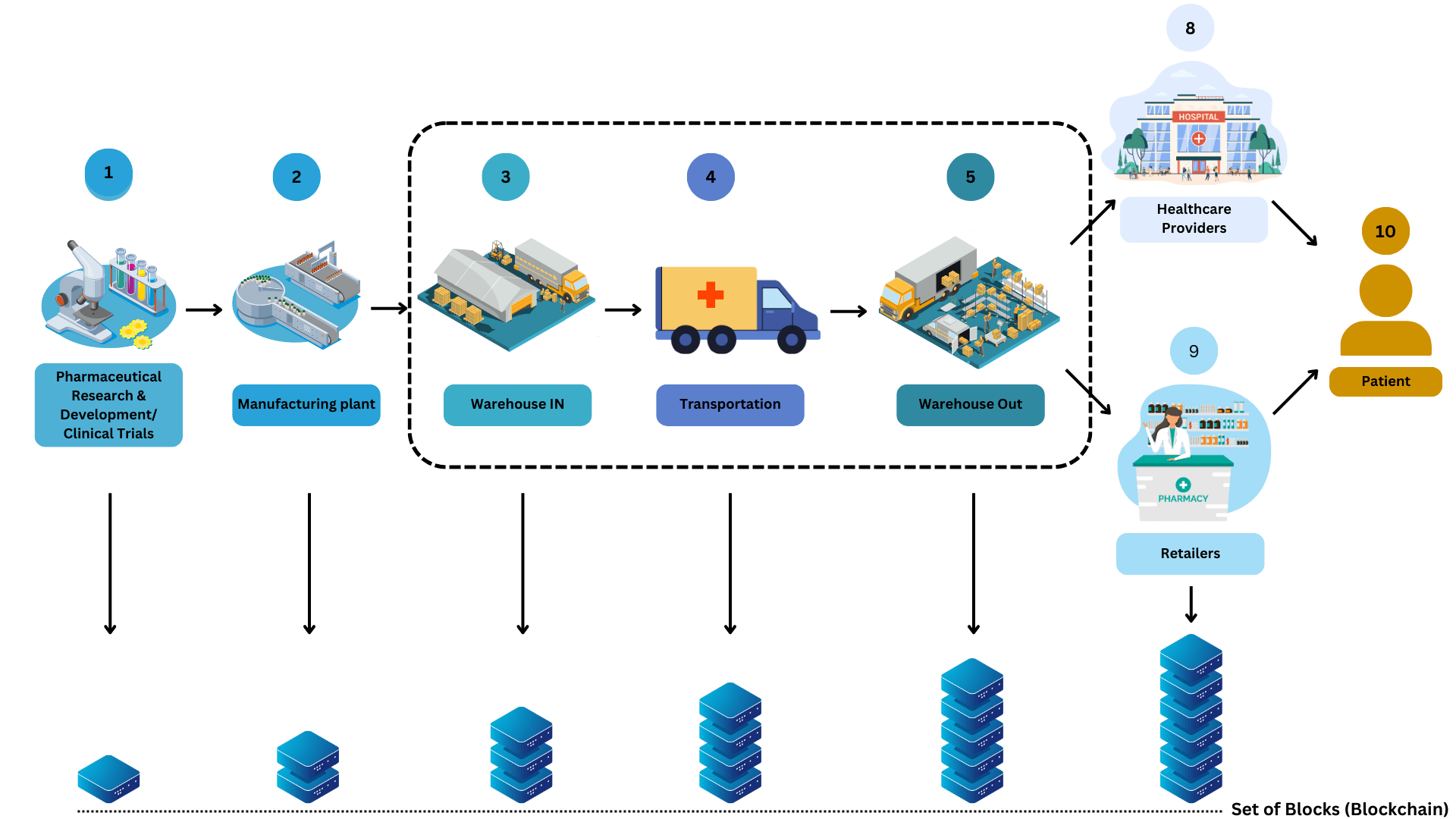 |
A secure and transparent pharmaceutical supply chain is essential for eliminating counterfeit medicines. By integrating blockchain technology, drug regulatory authorities, manufacturers, wholesalers, and pharmacies can create an interconnected and tamper-proof system.
In this model, an authorized regulatory body verifies and tracks all participants within the blockchain network, ensuring only legitimate entities operate within the supply chain. Similar to how Bitcoin transactions are recorded across multiple nodes, blockchain-based pharmaceutical tracking ensures that every transaction is mirrored across all participants, preventing unauthorized modifications.
Each medicine package is assigned a unique, encrypted QR code containing detailed product information. This ensures that the data remains secure and prevents duplication or tampering. Access to this information is controlled through cryptographic authorization, where only verified parties can decode and validate the authenticity of a drug. Additionally, digital signatures authenticate each transaction, ensuring data integrity across the supply chain.
By leveraging blockchain, the pharmaceutical industry can establish a decentralized, secure, and transparent system that enhances traceability, safeguards public health, and effectively combats counterfeit drugs.
Several pharmaceutical giants have already taken steps toward blockchain adoption. Projects like MediLedger and Pfizer’s blockchain-based drug tracking initiatives showcase real-world applications of this technology in securing medicine authenticity.
For instance, MediLedger, a consortium of major pharmaceutical companies, leverages blockchain to enhance supply chain security by ensuring real-time tracking and authentication of drugs. These implementations highlight how blockchain is already making a tangible impact in preventing counterfeit medicines.
Fake pharmaceuticals are a growing threat, but blockchain offers a revolutionary solution to combat them. By enabling secure tracking, authentication, and transparency, blockchain can help protect millions of lives. As industries embrace digital transformation, blockchain-driven pharmaceutical security will become a necessity rather than an option.
Looking to secure your pharmaceutical supply chain with blockchain? AYANWORKS specializes in decentralized identity and verifiable credentials powered by blockchain. Our expertise can be leveraged to enhance supply chain transparency, ensure trust, and combat counterfeiting through secure and verifiable data exchange. Get in touch today to explore tailored Pharmaceutical blockchain solutions for your industry.