CREDEBL is now a part of LF Decentralized Trust ecosystem! Click here to learn more.

CREDEBL is now a part of LF Decentralized Trust ecosystem! Click here to learn more.
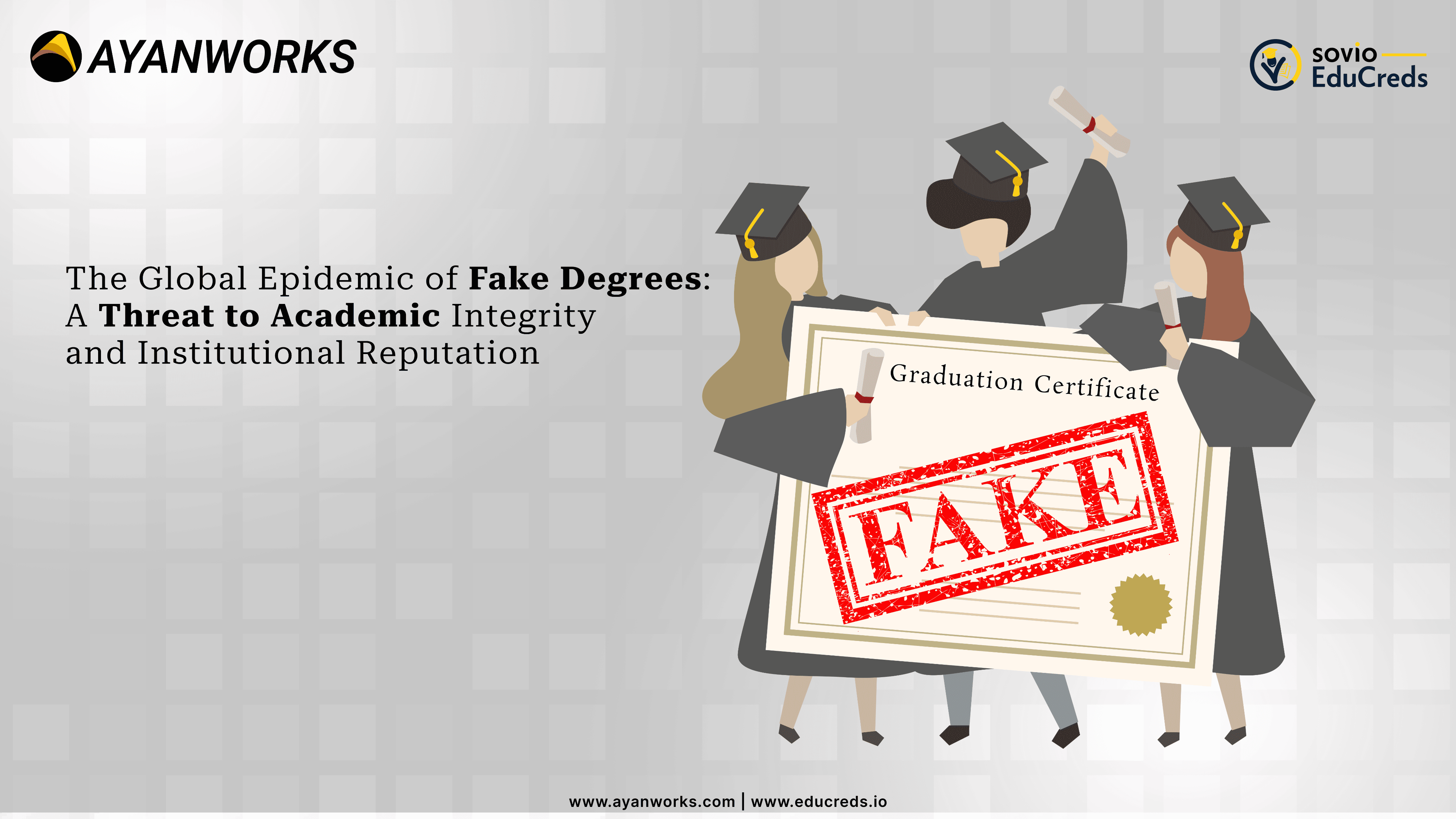
In today’s interconnected world, the rise of fake degrees has become a global epidemic, shaking public trust in education systems and threatening critical sectors like healthcare, engineering, and education. With fraudulent credentials undermining the reputation of academic institutions and endangering lives, the need for secure, verifiable solutions is urgent. This blog explores the scale of the problem, its impact on institutions, and how innovative solutions like blockchain-based digital credentials can address the crisis.
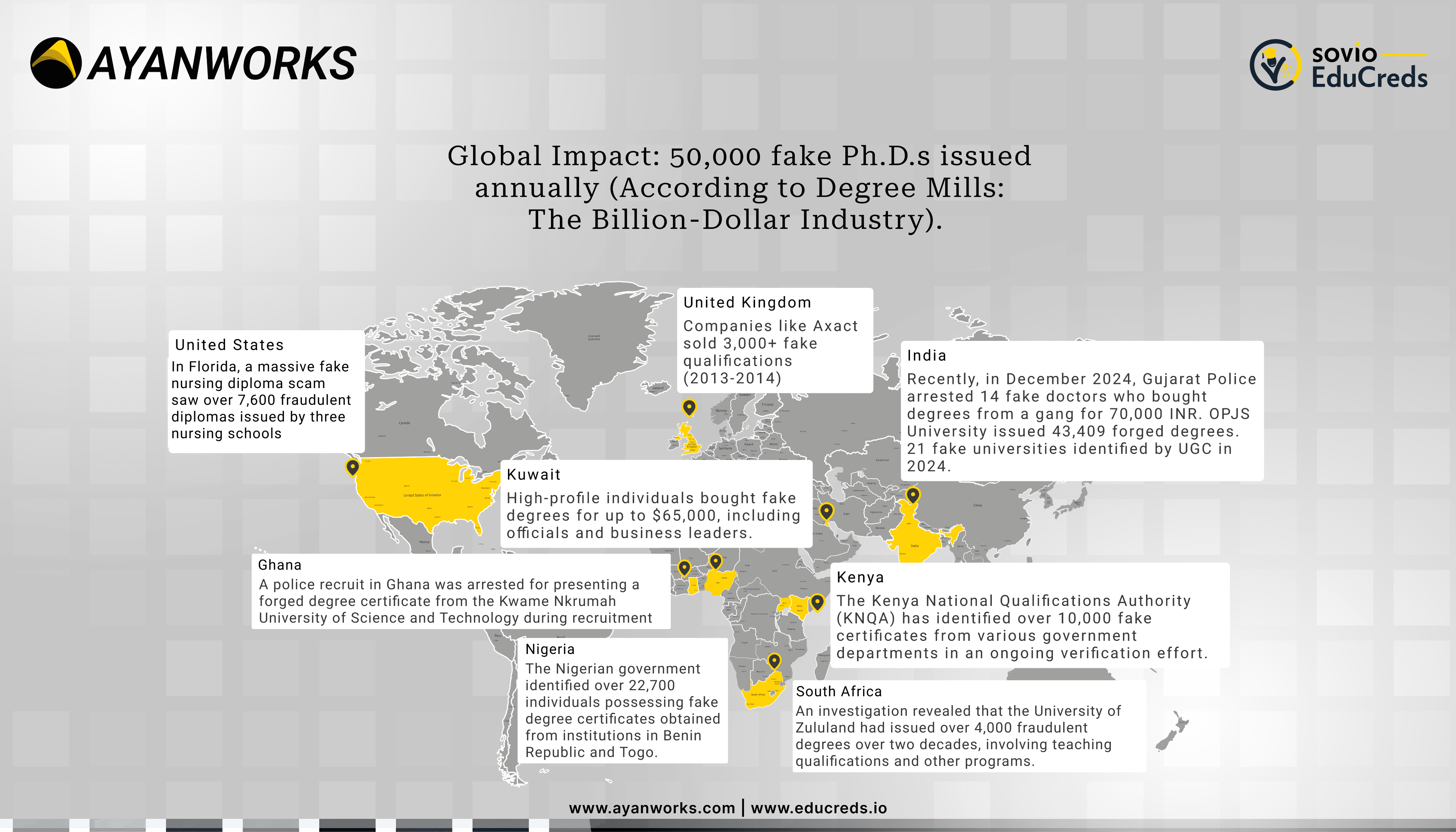
Fraudulent degrees are not just isolated incidents but a booming global industry. From diploma mills to counterfeit certifications, these fraudulent activities undermine academic integrity and public safety. Below are some shocking examples:
 |
Fake degrees directly impact the credibility of genuine credentials issued by universities. When fraudulent certificates associated with an institution surface, it leads to public distrust and loss of goodwill. In an increasingly competitive education market, reputational damage can lead to declining student enrollments and loss of credibility.
The presence of fake credentials reduces the value of real degrees issued by the institution. Graduates with legitimate qualifications may find their achievements questioned, which lowers the institution’s credibility.
Institutions often need to spend significant time and money verifying credentials to maintain their credibility. These efforts take away resources from other important tasks. There’s also a risk of facing legal issues and penalties, adding to the financial burden.
Fake degrees damage the reputation of past graduates by making people doubt the value of their qualifications. When fake degrees are discovered, it can make others question if all graduates from that school earned their degrees honestly.
Fake degrees pose significant risks to essential fields, including:
Traditional paper certificates, once considered the most reliable way to verify credentials, have many weaknesses in the digital age. They can be easily altered, forged, and are hard to verify internationally. These issues make them unsuitable for today’s needs and contribute to the spread of fake degrees, creating problems for schools, employers, and students. Digital verifiable credentials, powered by blockchain technology, offer a secure and scalable solution.
| Feature | Traditional Paper Documents | Verifiable Credentials (VCs) |
| Security | Prone to tampering, forgery, and loss. | Tamper-proof with cryptographic security; digitally signed. |
| Verification Time | Manual and time-consuming. | Instant, automated verification. |
| Cost | High costs for printing, mailing, and storage. | Low costs with digital issuance and storage. |
| Accessibility | Limited to physical access; can be lost or damaged. | Accessible online anytime, anywhere, easily backed up. |
| Sustainability | High paper usage and associated carbon footprint. | Eco-friendly with reduced paper usage and lower carbon footprint. |
| Privacy and Control | Limited control over personal data once shared. | Users control their data and choose what to share. |
| Interoperability | Limitations to integrate with digital systems. | Based on open standards; easy integration with systems. |
| Data Integrity | Susceptible to alterations and inaccuracies. | Ensured by cryptographic signatures and real-time updates. |
| Scalability | Resource-intensive to manage large volumes. | Easily scalable to handle large volumes of credentials. |
| Regulatory Compliance | Requires manual efforts for compliance. | Automates compliance with data protection regulations while keeping user-centric, consent-based data sharing |
Sovio EduCreds, a blockchain-based platform, revolutionizes how universities issue, store, and verify academic credentials. With Sovio EduCreds, universities or institutions can effortlessly issue verifiable digital credentials and students can experience hassle-free access to their digital credentials via ADEYA mobile wallet application.
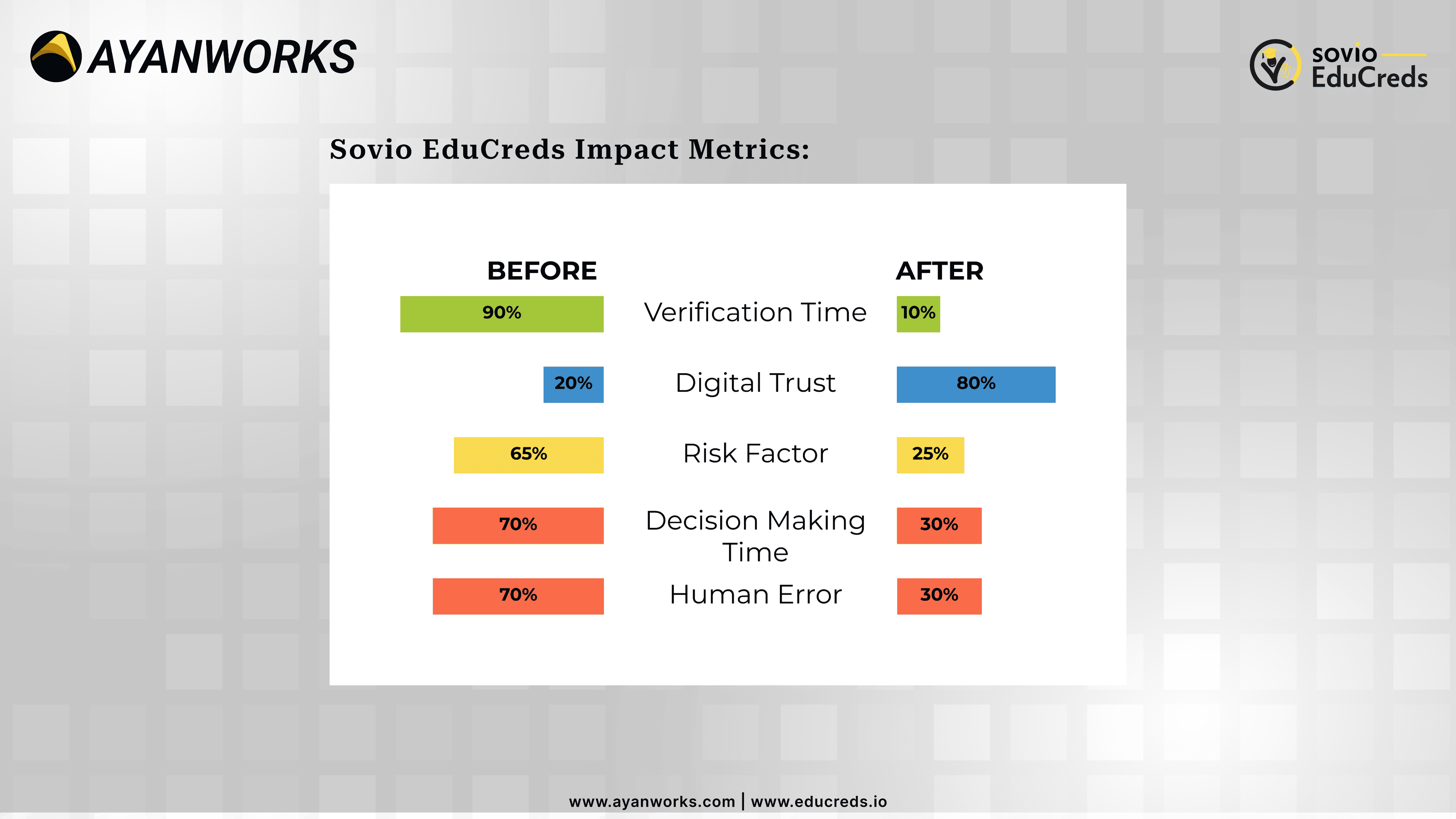 |
By adopting Sovio EduCreds, institutions can safeguard their reputation, streamline administrative processes, and enhance academic integrity.
Fake degrees are becoming a bigger problem worldwide, but solutions like digital credentials using blockchain technology can help. By using secure and tamper-proof systems, schools can rebuild trust, improve academic honesty, and protect their reputation.
Are you ready to secure your institution against fake degrees?
Book a demo today and discover how Sovio EduCreds can revolutionize your credentialing process.